

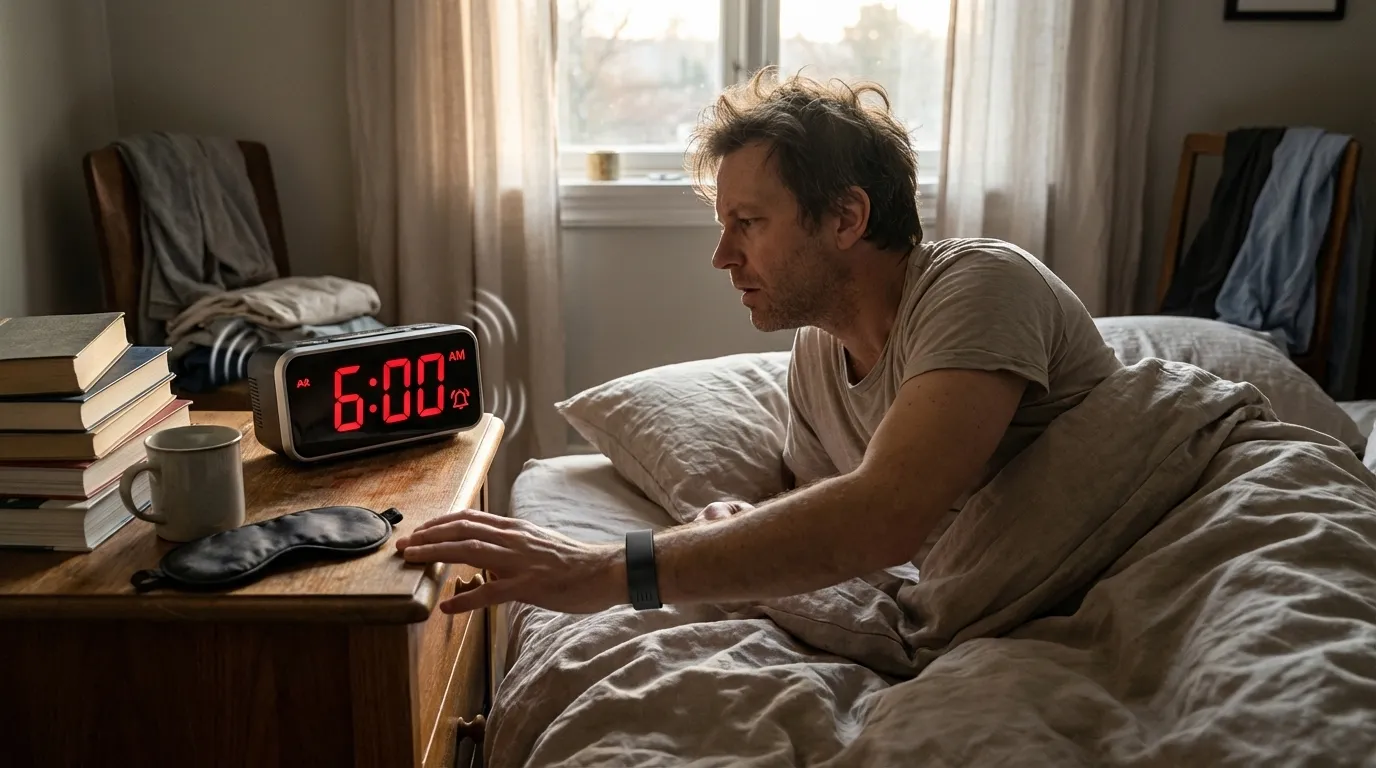
A loud alarm clock works best when sound still wakes the sleeper and the real issue is simply that ordinary alarms are too weak. If the sleeper already ignores sound, snoozes automatically, or punishes everyone else in the room without waking up, a different alarm type usually makes more sense.
If you searched loud alarm clock, there is a good chance you are not looking for novelty. You are looking for something that finally works. Maybe for yourself. Maybe for a teenager. Maybe for a house that is tired of the same morning fight happening over and over.
That is why this keyword is trickier than it looks. People think they are shopping by volume, but a lot of the time they are really trying to solve repeated wake-up failure. And louder is only one possible fix.
Does a loud alarm clock actually work?
A loud alarm clock works when the sleeper still responds to sound and mainly needs a stronger cue than a phone or standard bedside clock provides. If sound is still getting through, more volume can be enough. If sound is already being ignored half-asleep, then louder often becomes more disruptive than effective.
That is the part most shopping pages skip. They focus on decibels and features, but not on mechanism fit. The real question is not “how loud can this get?” It is “is sound still the right wake-up channel for this person?”
Who is a loud alarm clock best for?
A loud alarm clock usually makes the most sense for people who still wake to sound, but not reliably enough with ordinary alarms. In other words, the signal type is probably correct, but the strength is not.
- people who wake to sound eventually, but too late
- sleepers using weak phone speakers or low-volume alarms
- people who sleep alone and do not need a quieter shared-room solution
- buyers who want a simple bedside device before trying more specialized alarm formats
The honest filter
If someone already has multiple alarms blasting and still misses mornings, the next best experiment usually is not even more sound. It is a different kind of cue.
When does a loud alarm clock usually fail?
A loud alarm clock usually fails when the sleeper's brain has already learned to treat alarms as background, when sleep debt is severe, or when the person can silence sound without becoming meaningfully alert. In those cases, the extra volume often wakes everyone else first.
Common signs louder is not the real answer:
- the sleeper sets many alarms but still sleeps through the first part of the routine
- a parent or partner has become the real backup alarm
- the room gets punished by the noise while the sleeper barely reacts
- the sleeper snoozes automatically before fully waking
- the problem keeps coming back even after changing tones and alarm apps
What should you compare before buying one?
Before buying a loud alarm clock, compare the wake-up mechanism, not just the product listing. The most important thing is what kind of cue will actually cut through for this sleeper in this bedroom.
| Alarm type | Best for | Main tradeoff |
|---|---|---|
| Loud alarm clock | Sleepers who still respond to sound and need more intensity | Can disturb everyone nearby if sound is no longer the right fit |
| Bed shaker alarm | People who want strong vibration through the bed | Depends on mattress setup and is less portable |
| Silent or wearable vibration alarm | Shared-room situations and sleepers who ignore room sound | Needs to be comfortable and used consistently |
| Sunrise alarm | People who dislike harsh wake-ups and respond well to light | May be too subtle for deep or exhausted sleepers |
How loud should an alarm clock be?
There is no one perfect loudness number because the best volume depends on the sleeper, the room, and whether sound is still the correct channel. In practice, a louder clock helps only when the sleeper is still reachable through sound in the first place.
This is where people get stuck chasing specs. They compare decibels as if louder automatically means better, when sometimes the more important distinction is sound versus vibration, or room signal versus body signal.
What is better than a loud alarm clock if loudness already failed?
If loudness already failed, better options are the ones that change the wake-up pathway instead of turning the same pathway up. That can mean a bed shaker alarm, a more intentional morning-light routine, or a wearable vibrating alarm that delivers the cue directly on the body.
This matters most for people whose alarms are no longer just a sound problem. If the pattern is automatic snoozing, ignoring the first few alarms, or needing another person to intervene, more volume often just creates a louder version of the same failure.
When does Dawn Band make more sense than a loud alarm clock?
Dawn Band makes more sense when the sleeper is no longer failing because the alarm is too quiet. It makes more sense when the wake-up system needs a different signal entirely: direct wrist vibration instead of one more loud device on the nightstand.
That tends to be especially useful when:
- sound alarms have already been tried repeatedly
- roommates, siblings, parents, or partners are paying for the volume
- the sleeper needs a more personal cue that is harder to ignore half-awake
- the goal is not just waking up, but removing the daily morning battle
If that sounds closer to the real problem, it also helps to read our guides on alarm clocks for heavy sleepers and why people sleep through alarms before choosing the next experiment.
Need a stronger wake-up cue without escalating the noise?
If sound-based alarms have already had enough chances, Dawn Band gives you a direct vibration cue on the wrist instead of one more loud alarm clock on the nightstand.
Sources and references
FAQ
Does a loud alarm clock actually work for heavy sleepers?
It can, but only when sound is still the right wake-up mechanism. If the sleeper already ignores alarms or snoozes automatically, a louder clock may create more disruption than improvement.
How loud should an alarm clock be?
There is no single best volume level. The better question is whether sound still works for the sleeper at all. If not, changing the signal type matters more than increasing loudness.
What is better than a loud alarm clock?
If sound has already failed, options like bed shakers, sunrise alarms, or wearable vibration alarms can work better because they change how the wake-up cue reaches the sleeper.
When does Dawn Band make more sense than a loud alarm clock?
Dawn Band makes more sense when the morning problem is repeated alarm failure despite loud sound, shared-room stress, or a need for a more direct cue on the body.